



Why Dual Column Lift Positioners Are Ideal for Heavy Industrial Applications
Aerospace engineers and plant maintenance leads handling large engine components or massive subassemblies require lifting solutions that exceed the safety and stability limits of standard catalog equipment. When operations demand the precise positioning of multi-ton loads, dual-column lift systems provide the necessary capacity and control. At Unidex, we design these heavy-duty lift platforms to transform how facilities approach assembly and maintenance of oversized, high-value components.
Understanding the technical differentiators of dual column positioners helps procurement teams specify industrial lift solutions that meet rigorous operational requirements while protecting both worker safety and the bottom line.
What Are Dual Column Lift Positioners?
A dual-column lift positioner uses two synchronized electric columns to support a platform from both ends. Unlike single-post or scissor configurations, this “twin-pillar” design distributes weight evenly across two independent lift mechanisms working in perfect tandem.
Since 1991, we have specialized in manufacturing custom dual-column positioners that accommodate unique application requirements through proactive engineering. Our systems provide functions that standard material handling equipment simply cannot deliver:

Synchronized lifting.
Maintaining platform levelness even under asymmetric or shifting loads.

Precision control.
Variable speed lifting that allow for millimeter-level height adjustment.

Multi-axis flexibility.
Optional 360-degree rotation and tilting to present workpieces at the optimal ergonomic angle.
Heavy-duty integrity.
Structural steel construction with standard capacities ranging from 2,000 to over 10,000 lbs.
Key Benefits for Heavy Equipment Handling
For facility managers, the choice of a heavy-duty lift involves long-term reliability. A dual-column architecture solves the structural challenges faced when conventional equipment reaches its physical limit.
Superior Load Stability
Standard lifts often suffer from platform deflection (tilting) when a load is off-center. Our dual column spacing prevents this deflection, providing a rigid, stable work surface. This is critical for high-precision industries where a fraction of an inch of movement can lead to component damage or assembly misalignment.
Engineered Safety and Ergonomics
Worker safety improves through features designed to eliminate “workarounds.” By positioning heavy components at the exact height needed, we eliminate the need for ladders or awkward overhead reaching. Key safety features include:
- Velocity fuse protection. Prevents free-fall in the event of a hose failure.
- Overall travel protection. Via limit switches monitoring.
- Synchronized electronic controls. Prevents column mismatch.
Industries That Rely on Heavy-Duty Positioners
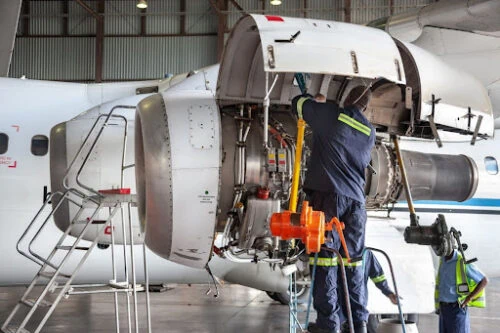
Global leaders in aerospace, defense, and automotive manufacturing depend on Unidex technology for their most critical operations. Industries include:
- Aerospace. We serve clients such as Boeing, GE, and Pratt & Whitney, providing lifts for wing section integration, cargo door installation, and turbine engine maintenance.
- Automotive. Our systems handle welding and powertrain assembly, where high-cycle reliability is needed.
- Military & defense. From turret integration on armored vehicles to radar sensor installation, we provide the ruggedized precision required for defense contracts.
- Industrial manufacturing. We provide specialized industrial lift solutions for large casting machining, structural steel fabrication, and heavy roll handling in the paper and textile industries.
Dual Column vs. Scissor Lifts
While scissor lifts are a common sight in many warehouses, they encounter fundamental structural limitations in heavy industrial environments. Key characteristics include:
- Capacity constraints. Most scissor lifts max out at 4,000 lbs. Dual column systems routinely handle 2,000 to 10,000 lbs without compromising stability.
- Stability under side loads. Scissor mechanisms are prone to lateral instability. Dual column designs are inherently more rigid, making them the only safe choice for rotating or lifting loads.
- Footprint vs. height. Scissor geometry requires a large pit to reach specific heights. Dual columns achieve greater vertical travel with a much smaller floor footprint, preserving valuable facility square footage.
If your application involves loads exceeding 2,000 lbs or requires rotation and tilting, a dual column system is the superior investment for safety and longevity.
Premium Performance Through Custom Engineering
At Unidex, we don’t just provide a product; we provide an engineered solution. Our dual-column work positioners are designed to improve your facility’s throughput by making the most difficult lifting tasks predictable and safe.
Whether you are positioning aircraft components or handling heavy engine assemblies, our dual column lift technology delivers the precision and reliability your operators demand.
Ready to optimize your heavy equipment handling? Request a custom quote today. Our engineering team will evaluate your specific load characteristics and facility constraints to design an industrial lift solution optimized for your success.
Author

Latest entries
- April 20, 2026UncategorizedWhy Dual Column Lift Positioners Are Ideal for Heavy Industrial Applications
- April 9, 2026Lift MaintenanceHow to Replace Aging Material Handling Systems
- December 31, 2025UncategorizedHydraulic vs. Air Over Oil vs. Battery vs. Electric Hydraulic Lifts: Which Is Right for You?
- December 2, 2025UncategorizedWhy EHS Professionals Trust Ergonomic Lifting Systems
