EHS managers and safety directors face persistent workplace lifting safety challenges. According to the Bureau of Labor Statistics, overexertion injuries, primarily from lifting and material handling, account for over 30% of workplace injuries and require days away from work. These incidents cost organizations billions annually in workers’ compensation and lost productivity.
Ergonomic work positioners eliminate these hazards by mechanically positioning materials at optimal working heights, significantly reducing musculoskeletal disorders (MSDs) while improving efficiency.
By implementing powered positioning equipment for material handling injury prevention, organizations can reduce claims, improve OSHA compliance, and enhance operational performance. Unidex can help with our expertise in workplace lifting safety systems.
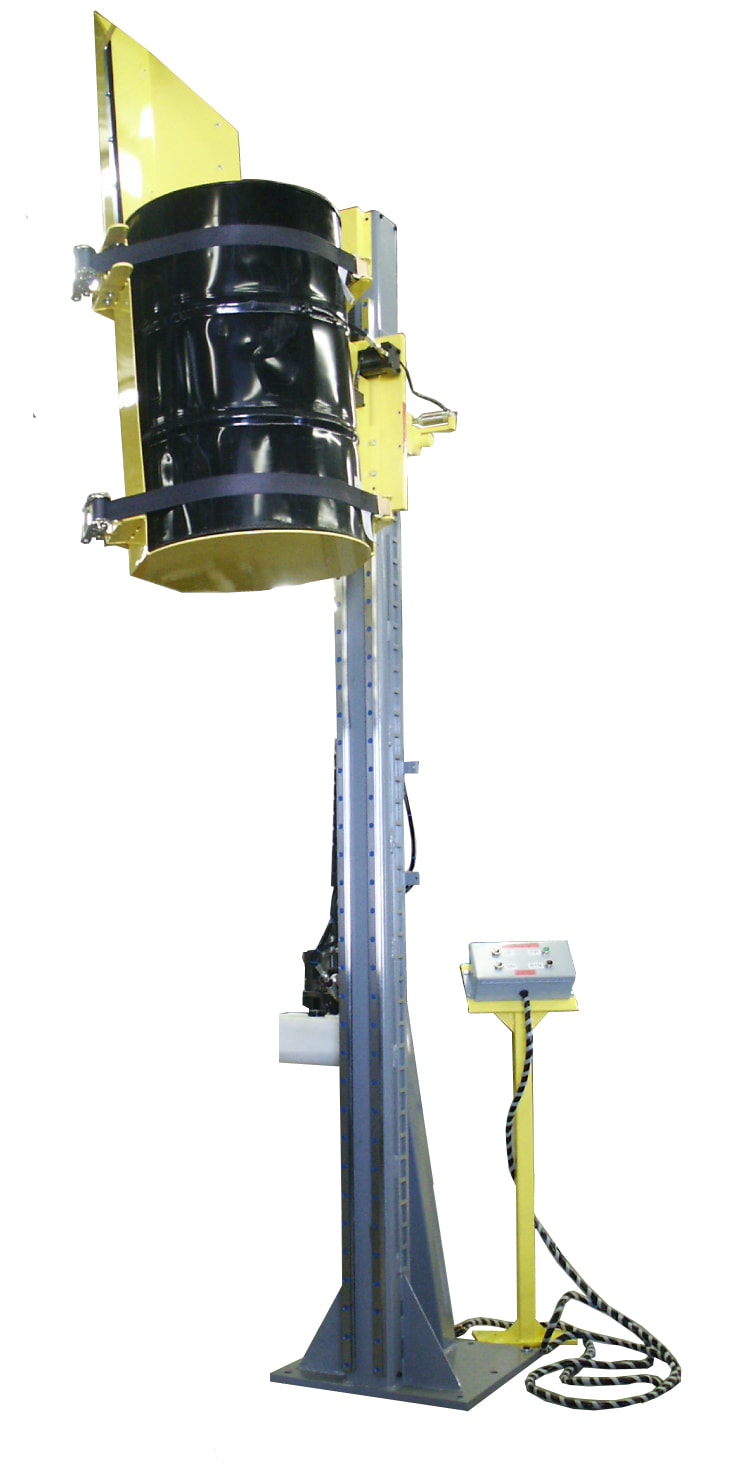
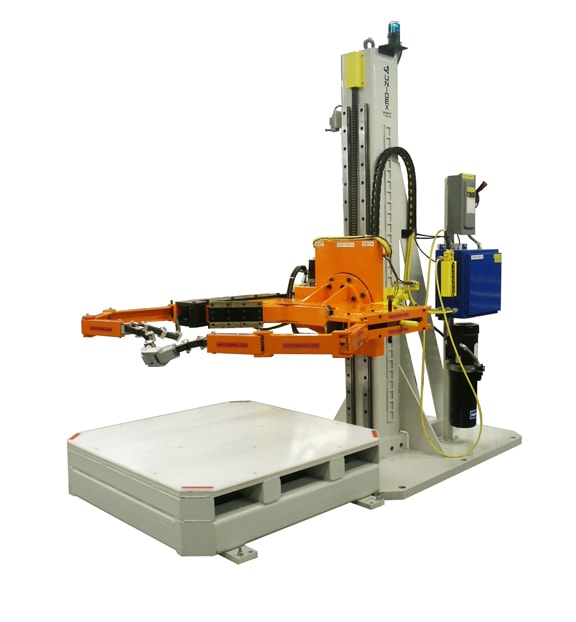
EH Standard-Duty
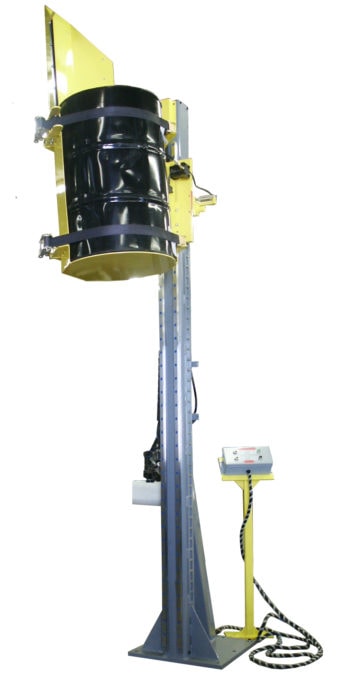
The EH Standard-Duty from UNIDEX is an affordable and compact solution for light and medium-duty applications up to 500 lbs. This product is designed to deliver enhanced durability, flexibility, versatility, and safety for your production needs.
The UNIDEX EH Standard-Duty offers the following standard features:
- 500 lb lifting capacity
- Controlled speed
- 60’’ lift stroke
- Articulating arms up to 96’’
- Electric hydraulic lift system can plug into 110 VAC outlet
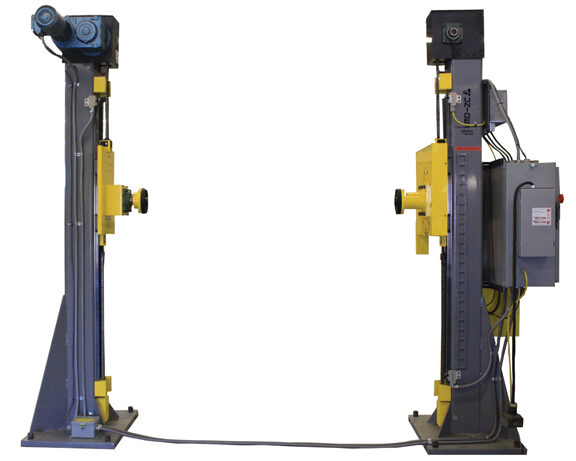
EH Dual Station
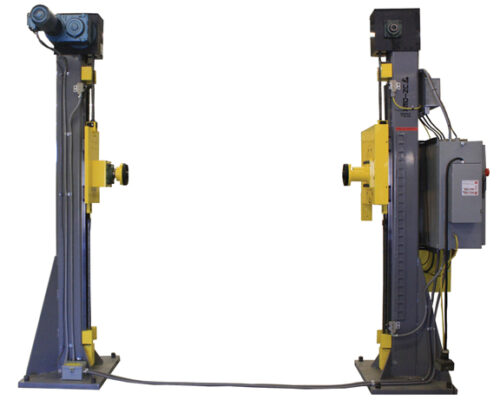
The UNIDEX EH Dual Station features 360° of rotation on its centerline. It relies on an electric-hydraulic pump/chain design to drive vertical movement and allow for the simultaneous operation of its two cylinders. The carriage offers linear motion using a rail system bolted to the lifting column.
The EH Dual Station accommodates the following applications:
- Work Positioning
- Inspection
- Repair
- Welding
- Component Build/Transfer
- Product Assembly
Its custom features include:
- Up to 3 axes of part movement
- Voltage options of 200 to 240 VAC or 460 to 480 VAC
- Up to 60’’ of powered lift stroke
- Up to 6000 lbs of lift capacity
- Pendant control
- Electric hydraulic system
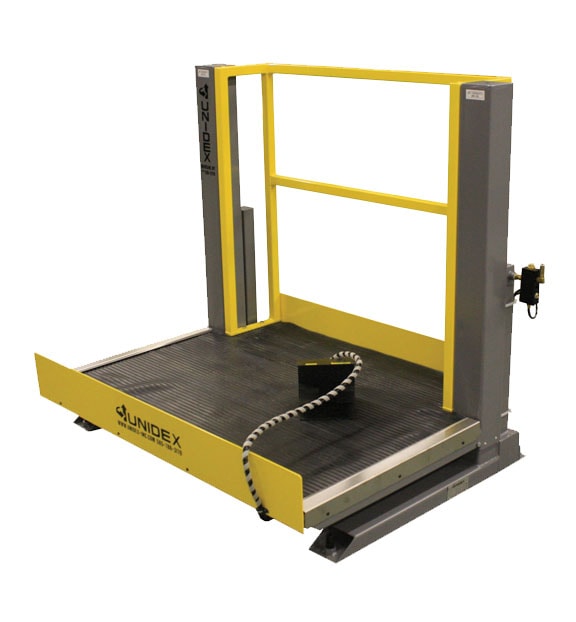
EH Heavy Duty
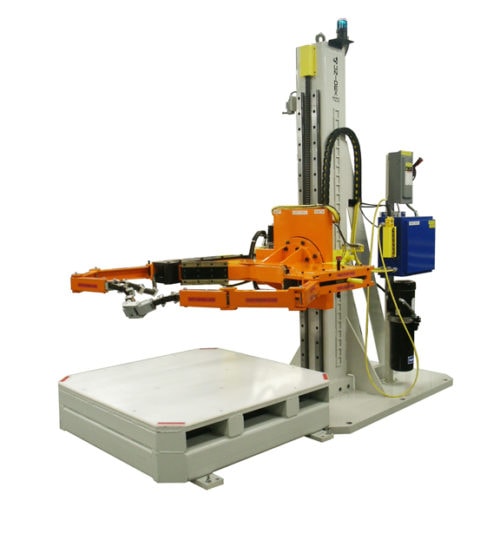
The UNIDEX EH Heavy-Duty comes with the following standard features:
- Durable oven-baked powder coat finish
- Full safety interlocks
- 36’’ vertical lift
- 2000 lb lift capacity
- Cabinet or pedestal mounted up and down palm buttons
- 110/220 VAC electric hydraulic lift system
Optional features:
- Powered rotations
- Stainless steel construction with special finishes
- Pendant controlled vertical height adjustment
- Increased height adjustments