


Why Dual Column Lift Positioners Are Ideal for Heavy Industrial Applications
Comments Off on Why Dual Column Lift Positioners Are Ideal for Heavy Industrial Applications
Aerospace engineers and plant maintenance leads handling large engine components or massive subassemblies require lifting solutions that exceed the safety and stability limits of standard catalog equipment. When operations demand the precise positioning of multi-ton loads, dual-column lift systems provide the necessary capacity and control. At Unidex, we design these heavy-duty lift platforms to transform how facilities approach assembly and maintenance of oversized, high-value components.
Understanding the technical differentiators of dual column positioners helps procurement teams specify industrial lift solutions that meet rigorous operational requirements while protecting both worker safety and the bottom line.
What Are Dual Column Lift Positioners?
A dual-column lift positioner uses two synchronized electric columns to support a platform from both ends. Unlike single-post or scissor configurations, this “twin-pillar” design distributes weight evenly across two independent lift mechanisms working in perfect tandem.
Since 1991, we have specialized in manufacturing custom dual-column positioners that accommodate unique application requirements through proactive engineering. Our systems provide functions that standard material handling equipment simply cannot deliver:

Synchronized lifting.
Maintaining platform levelness even under asymmetric or shifting loads.

Precision control.
Variable speed lifting that allow for millimeter-level height adjustment.

Multi-axis flexibility.
Optional 360-degree rotation and tilting to present workpieces at the optimal ergonomic angle.
Heavy-duty integrity.
Structural steel construction with standard capacities ranging from 2,000 to over 10,000 lbs.
Key Benefits for Heavy Equipment Handling
For facility managers, the choice of a heavy-duty lift involves long-term reliability. A dual-column architecture solves the structural challenges faced when conventional equipment reaches its physical limit.
Superior Load Stability
Standard lifts often suffer from platform deflection (tilting) when a load is off-center. Our dual column spacing prevents this deflection, providing a rigid, stable work surface. This is critical for high-precision industries where a fraction of an inch of movement can lead to component damage or assembly misalignment.
Engineered Safety and Ergonomics
Worker safety improves through features designed to eliminate “workarounds.” By positioning heavy components at the exact height needed, we eliminate the need for ladders or awkward overhead reaching. Key safety features include:
- Velocity fuse protection. Prevents free-fall in the event of a hose failure.
- Overall travel protection. Via limit switches monitoring.
- Synchronized electronic controls. Prevents column mismatch.
Industries That Rely on Heavy-Duty Positioners
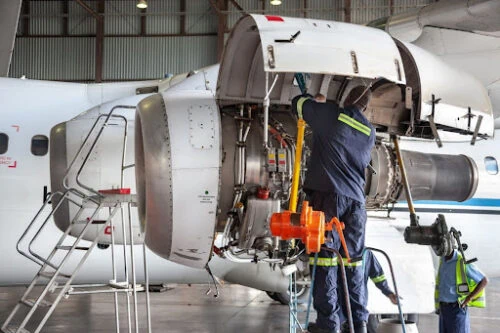
Global leaders in aerospace, defense, and automotive manufacturing depend on Unidex technology for their most critical operations. Industries include:
- Aerospace. We serve clients such as Boeing, GE, and Pratt & Whitney, providing lifts for wing section integration, cargo door installation, and turbine engine maintenance.
- Automotive. Our systems handle welding and powertrain assembly, where high-cycle reliability is needed.
- Military & defense. From turret integration on armored vehicles to radar sensor installation, we provide the ruggedized precision required for defense contracts.
- Industrial manufacturing. We provide specialized industrial lift solutions for large casting machining, structural steel fabrication, and heavy roll handling in the paper and textile industries.
Dual Column vs. Scissor Lifts
While scissor lifts are a common sight in many warehouses, they encounter fundamental structural limitations in heavy industrial environments. Key characteristics include:
- Capacity constraints. Most scissor lifts max out at 4,000 lbs. Dual column systems routinely handle 2,000 to 10,000 lbs without compromising stability.
- Stability under side loads. Scissor mechanisms are prone to lateral instability. Dual column designs are inherently more rigid, making them the only safe choice for rotating or lifting loads.
- Footprint vs. height. Scissor geometry requires a large pit to reach specific heights. Dual columns achieve greater vertical travel with a much smaller floor footprint, preserving valuable facility square footage.
If your application involves loads exceeding 2,000 lbs or requires rotation and tilting, a dual column system is the superior investment for safety and longevity.
Premium Performance Through Custom Engineering
At Unidex, we don’t just provide a product; we provide an engineered solution. Our dual-column work positioners are designed to improve your facility’s throughput by making the most difficult lifting tasks predictable and safe.
Whether you are positioning aircraft components or handling heavy engine assemblies, our dual column lift technology delivers the precision and reliability your operators demand.
Ready to optimize your heavy equipment handling? Request a custom quote today. Our engineering team will evaluate your specific load characteristics and facility constraints to design an industrial lift solution optimized for your success.
How to Replace Aging Material Handling Systems
Comments Off on How to Replace Aging Material Handling Systems
Material handling equipment helps streamline workflows, improves ergonomics for workers, and protects large, heavy, or awkward materials from damage. Over time, gradual wear and tear can make this equipment more difficult to use or more prone to maintenance and repair. The result is a loss of system efficiency and greater risk of injury or damage to equipment or materials.
If your equipment has been in use for a long time, or is not working as well as it once was, it may be time to consider an upgrade. Here, we’ll look at some of the key signs that equipment needs to be replaced, as well as tips for assessing your current system and operational needs.
Signs Your Equipment Needs Replacing
When a piece of material handling equipment breaks or fails, it’s clear that a repair is needed, or it may be time for a new or upgraded unit. However, when equipment has been in place for years and used daily without incident, it can be easy to overlook problems and inefficiencies that start small and gradually build.
There are some signs that indicate your equipment is aging and your operations might benefit from new components or a new system. These include:

Frequent Breakdowns and Maintenance
If shutdowns and maintenance become more frequent, costs increase and unscheduled downtime impacts productivity.

Increased Safety Risks and Non-compliance
An increase in safety hazards, accidents, or near-misses involving material handling equipment can result in OSHA rule non-compliance or fines.

Production Bottlenecks
When equipment can’t safely keep up with increased demand, it has downstream effects on overall plant efficiency.

Increased Labor Costs
If equipment isn’t performing as needed, workers may need to compensate by performing additional manual tasks, which can increase labor expenses and risk injuries or material damage.

Higher Energy Expenses
Inefficient equipment uses more energy than newer, energy-efficient models, making them more expensive to operate over time.
Planning for a Seamless Equipment Swap
Replacing or upgrading material handling equipment always has a slow-down effect on operations, but with careful planning it’s possible to minimize the disruptions.
1. Assess Your Current Capabilities
Start by making a list of each piece and what it is used for. Don’t assume your entire system needs an overhaul with all new equipment.Instead, identify which specific pieces need to be replaced entirely, which are working well as they are, and which might need certain components to be updated. This is also a good time to determine if your system is still meeting your material handling needs in terms of speed, volume, safety, or other factors.
2. Look for Opportunities
Prior to selecting specific replacements, take advantage of the opportunity to evaluate potential changes, such as ways to improve safety or incorporate powered or automated equipment into your system. Investing in new equipment is also a great way to consolidate inefficient processes, improve energy efficiency, or scale your system up or down. This is also the time to set a project budget and timeline.
3. Review the Options
Once you know which pieces or tasks are not working well and what you hope to accomplish with new or different equipment, it’s time to look for replacements. Unidex carries a comprehensive selection of mobile lifts, industrial manipulators, work positioners, and portable lifts that simplify many material handling tasks. We can also work with you to create a custom, pre-engineered system that fits your facility and operations.
4. Develop a Comprehensive Plan
With your needs and resources determined and potential solutions identified, the next step is planning things like:
- How will you phase out existing equipment?
- What changes and upgrades are needed to the facility or work area to accommodate new equipment?
- When can equipment be installed and brought online?
- What impact will this changeover have on operations (including for how long and how personnel will adjust their work during this time)?
- What training will personnel need to use the new equipment?
- What is the timeframe for getting the new system fully up to speed?
Thinking through the details and potential consequences, as well as how your organization will address them gives you the best odds of a smooth and efficient transition.
Customers Rely on Unidex Time and Again
Material handling equipment is an investment in your operations, productivity, and employee safety. When it loses efficiency or contributes to downtime and delays, partnering with Unidex makes it less overwhelming to find the right solutions for your facility.
Unidex offers a comprehensive selection of material handling equipment for all different shapes, sizes, and types of parts, objects, and equipment. We’ll work with you to understand how your facility, operations, and employees work so we can find a solution that fits. Whether it’s a single standard piece of equipment or a fully customized system, we can be your trusted, go-to partner now and as needs change over time. Contact us today to schedule a consultation for your retrofit, replacement, or upgrade project.
